ALJ/MAB/rbg DRAFT Agenda ID # 6922 (Rev. 1)
Ratesetting
9/20/07 Item # 7
Decision PROPOSED DECISION OF ALJ BUSHEY (Mailed 8/21/2007)
BEFORE THE PUBLIC UTILITIES COMMISSION OF THE STATE OF CALIFORNIA
Application of the North American Numbering Plan Administrator, on behalf of the California Telecommunications Industry, for Relief of the 714 Numbering Plan Area. |
Application 07-03-010 (Filed March 13, 2007) |
OPINION GRANTING REQUEST FOR AREA CODE
OVERLAY IN THE 714 AREA CODE
Summary
This decision authorizes an area code overlay to add a new area code, 657, to the same geographic region as the 714 area code under the terms set forth below. In taking this action, we grant the application filed on March 13, 2007, by the North American Numbering Plan Administrator (NANPA) requesting the California Public Utilities Commission (Commission) to approve an all-services overlay. We are adopting a 12-month implementation schedule. The coexistence of both the 657 and 714 area codes will provide additional numbering resources to the dwindling supply of telephone numbers and will allow service providers to meet the demand for telephone numbers. A timely start for the implementation of the area code overlay is important to ensure that consumers continue to have access to telephone numbers from the service provider of their choice. Accordingly, the implementation of the new area code overlay shall commence immediately.
Given the novelty of an area code overlay, an effective public education program (PEP) will be essential in fostering success of this new form of area code change in California,1 as ordered herein. After the public education period, the new 657 area code will be available in the same geographic location as the current 714 area code. Consequently, consumers must dial the three-digit area code for all calls to and from telephone numbers with the 714 or 657 area codes.2 Consumers may begin using this new dialing procedure six months after the start of the 12-month implementation schedule and continue to do so for six months, i.e., during the permissive dialing period. However, consumers must use this new dialing procedure at the end of the permissive dialing period, which is the start of the mandatory dialing period. No consumers will be required to change their telephone numbers. New telephone numbers with the new 657 area code can be issued to consumers coincident with the start of the mandatory dialing period or 12 months after the effective date of this order.
Background
In its application, NANPA stated that in 1998, it formulated an overlay plan for the 714 area code because of the large demand for the limited supply of telephone numbers. In Decision (D.) 99-03-058, the Commission approved and ordered the implementation of the overlay plan. Due to public controversy regarding this and five other pending area code overlays, in D.99-12-051 the Commission suspended all six overlay plans, and instead ordered the development and implementation of more efficient means of using numbering resources to extend the life of area codes. One of the most effective number conservation measures is thousand-block number pooling.3 Number pooling was implemented in the 714 area code in October 2000, and has been in place since that time. Number pooling and other conservation measures have extended the life of the 714 area code for several years, thus delaying the need for an area code change. However, at this point in time, conservation measures have run their course, and the remaining supply of numbers has dwindled to the point that a new area code must be opened.
In its application, NANPA stated that it used the October 2006 Number Resource and Utilization Forecast (NRUF) report and NPA Exhaust Analysis for the 714 area code, which concludes that the 714 area code will "exhaust"4 in the fourth quarter 2008. Based on this information, Commission staff requested that NANPA convene an Industry Relief meeting on October 3, 2006 to develop and consider new area code change alternatives, which produced six alternative area code plans. Five of the six alternatives consist of area code "splits," which geographically divide an area code into two or more area codes. In a split, one side of a designated line retains the existing area code, while the other side(s) acquires the new area code(s). The other alternative considered was an all-services overlay. The industry representatives reached consensus to propose the overlay and two of the split options (Split Alternative #4 and Split Alternative #6) for public comment. Descriptions of these three proposed area code change options are presented in Attachment A. A map of the 714/657 area code boundaries is presented in Attachment B.5
On March 13, 2007, NANPA submitted its application, on behalf of the California telecommunications industry, requesting that the Commission approve an all-services overlay for the 714 numbering plan area (NPA). The application states that if the Commission does not approve an area code change, the available central office codes for the 714 area code will exhaust in the fourth quarter of 2008. Subsequently, NANPA advised the Commission that exhaust would occur in the second quarter of 2008.
The industry representatives also recommended a 13-month implementation schedule. It allows for a public education period, which is generally described in Attachment D to today's decision. The schedule includes a 6-month permissive dialing period, which will allow consumers to use both the old and new dialing procedures within the 714 area code. The mandatory dialing period will begin at the conclusion of the permissive dialing period. The first assignment of telephone numbers with the new 657 area code will occur coincident with the start of the mandatory dialing period. This was reduced from the requested schedule due to the change in exhaust date.
At Commission staff's direction, NANPA served its application on all parties to the local exchange competition proceeding, Rulemaking (R.) 95-04-043/Investigation (I.) 95-04-044. On May 3, 2007, the assigned Administrative Law Judge issued a ruling directing NANPA to serve the application on all cities and counties in the 714 NPA's geographic region and, to the extent not included in the R.95-04-043/I.95-04-044 list, all 714 NPA code and thousand-block holders.6 The ruling also extended the protest period for the application to June 1, 2007. No protests were filed.
Public Meetings and Comments Regarding 714 Area Code Changes
The California Public Utilities Code requires that NANPA and Commission staff conduct at least one local jurisdiction and three public meetings within nine months from when NANPA informs the Commission of the need for an area code change.7 The statute also requires NANPA and Commission staff to inform the local representatives and the public about the area code change options.8 These meetings allow for the local representatives and the public to voice their opinions and to discuss the possible impacts of the proposed area code change options.9
Accordingly, with NANPA's assistance, the Commission's staff conducted an extensive public comment process beginning with a meeting with officials from various local jurisdictions on January 17, 2007, in Anaheim. Subsequently, NANPA and Commission staff conducted three public meetings: one each in Anaheim, Orange, and Huntington Beach. Of the 64 speakers' comments during these local jurisdiction and public meetings, 27 supported the overlay, 21 supported various splits, and 16 favored no action at all.
The Commission's Public Advisor's Office also accepted written comments via postal and electronic mail subsequent to these local jurisdiction and public meetings. It received 182 written comments of which 94 preferred the overlay, 38 preferred various splits, and 47 favored no area code change. Moreover, Commission staff developed a method for the public to submit their comments and preferences online via the Commission's web site. The Commission received 1,575 comments via this online method of which 718 supported the overlay, 590 favored various splits, and 199 opposed any area code change.
Subsequent to the local jurisdiction and public meetings, NANPA received requests to analyze two additional split alternatives, one proposed by the City of Anaheim and the other from the Orange County Fire Authority. NANPA calculated the projected lives for each of these additional split alternatives, both of which resulted in unbalanced lives, thereby making them infeasible to implement.10
Finalizing the Telecommunications Industry's Recommendation
On February 14, 2007, NANPA reconvened the telecommunications industry representatives to review the public's comments and to develop a final recommendation to propose to the Commission. The telecommunications industry's consensus recommendation was to only propose an all-services overlay, which will superimpose a new area code, 657, over the same geographic area as the current 714 area code. The industry representatives supported this area code change option because it would be quicker to implement than a geographic split and would be least disruptive to their customers. They also indicated that their existing customers, including local tourist attractions and theme parks, would retain their existing telephone numbers and area codes. Only new telephone lines and/or services would be assigned the new 657 area code.
The industry representatives rejected the various split alternatives because each would divide multiple cities and other communities of interest, as well as require some, but not all, customers to incur the costs associated with changing area codes.
Discussion
Pursuant to Pub.Util. Code §§ 7936 and 7943(c)11, before approving any new area code, the Commission must obtain utilization data from NANPA for any area code for which an area code change is proposed and must "perform a telephone utilization study and implement all reasonable telephone number conservation measures." Where there is no reasonable alternative other than to create a new area code, the Commission must "do so in a way that creates the least inconvenience for customers."12
As set out above, the Commission adopted various number conservation measures, which extended the life of the 714 area code for several years. Despite these measures, NANPA now projects the 714 area code will exhaust in the second quarter of 2008. NANPA fully supported this projection by providing utilization data and performing a utilization study on the 714 area code. We find, therefore, that we have met the statutory requirements of §§ 7936 and 7943(c). Accordingly, there is no other reasonable alternative but to create a new area code.
NANPA and the telecommunications industry have developed both area code split and overlay options and presented these options to the public. The consensus recommendation of the industry and preferred option of the public was an all-services overlay of the 714 area code, which will add the new 657 area code to the same geographic region of the 714 area code. NANPA's application identified several key factors in this determination. First, the 714 area code is home to numerous significant tourist attractions including Disneyland and other theme parks. These tourist attractions would be severely disrupted by an area code split, which would require some, but not all, to change their area code. Second, no logical lines of demarcation were readily apparent, as communities and cities were not contained within rate center boundaries. Finally, an overlay could be implemented more quickly than an area code split.
We note, however, that a significant number of customers did not support the proposed overlay. The reason most commonly cited was the inconvenience of 1+10-digit dialing.13 Similarly, numerous members of the public opposed any change at all. While we are sympathetic to these concerns, some level of inconvenience is inevitable to expand the supply of telephone numbers available in this region. Ceasing to issue new telephone numbers is not a reasonable course of action. On balance, we conclude that the all-services overlay option will cause the least inconvenience for consumers. We, therefore, adopt the all-services overlay for the 714 area code in NANPA's application as proposed.
Adopted Schedule for 714 Area Code Overlay Implementation
In NANPA's application, the telecommunications industry recommended a 13-month implementation schedule for the 714/657 all-services overlay, which includes a public education program. Due to the change in forecasted exhaust date this has been reduced to 12 months as presented generally below.
EVENT |
TIMEFRAME |
Start of Customer Education and Network Preparation Period |
6 months |
Start of Permissive Dialing and Continue Customer Education Mandatory Dialing and First Code Activation Begins 30 days later |
6 months |
Total Implementation Interval |
12 months |
We adopt a 12-month implementation interval, which will start on the effective date of this order. However, we do note that according to the Pub.Util. Code § 7931, some key transitional events in the implementation schedule of any area code change must include customer notifications14 from each service provider and transitional dialing periods15 before opening a new area code.
In accordance with the Pub.Util. Code, within 12 months prior to the date the Commission adopts for opening the new 657 area code, service providers currently operating in the 714 area code or possessing numbering resources in the 714 area code shall provide written notification to all affected customers about the specific geographic region that will be served by the new 657 area code and the schedule for any transitional dialing period. (Pub.Util. Code § 7931(f)(2).) Moreover, within three months before the date the Commission adopts for opening the new 657 area code, each service provider shall again provide written notification to all its affected customers about the specific geographic region that will be served by the new 657 area code and the schedule for any transitional dialing period. (Pub.Util. Code § 7931(g).)
Although the telecommunications industry did not include providing customer notifications in its schedule matrix, it did indicate in its public education plan that it has scheduled two customer notifications before and after the permissive dialing period to "[a]nnounce the new area code plan," which will include information about the mandatory 10-digit dialing and the affected areas.
We agree with the proposal to provide the first customer notice before the permissive dialing period and to include information about the new area code plan, the new dialing procedure, and the affected areas. However, service providers shall ensure that the first customer notice will be in the form of a written notice and will include the schedule for the transitional dialing period.
We also agree with the proposal to provide a second customer notice after the permissive dialing period and to again include information about the new area code plan, the new dialing procedure, and the affected areas. However, service providers shall ensure that the second customer notice will be within three months before the new 657 area code is opened. They shall also ensure that the second customer notice will be in the form of a written notice and will include the schedule for the transitional dialing period. Furthermore, all such customer notices developed by each service provider shall be submitted to and approved by the Commission's Public Advisor prior to mailing them to the affected customers.
Aside from providing written customer notifications, service providers are responsible for providing a transitional dialing period when opening a new area code. Historically, the Commission has used the terms "permissive" and "mandatory" dialing periods as components of the transitional dialing period. The overlay does not involve a "permissive" dialing period as narrowly defined in Section 7932 (i.e., where the caller can reach the same party by dialing either the old or new area code). The term "permissive" dialing period in connection with the overlay, however, refers to the period during which consumers can reach the same party by dialing or not dialing the area code. Consumers are permitted, but not required, to use the new dialing procedure during this period. During the permissive dialing period, customers should be encouraged to voluntarily use the new dialing pattern for all their calls as part of the education program for the overlay. Correspondingly, the "mandatory" dialing period refers to the mandatory requirement to dial the area code for all calls to and from the 714 and 657 area codes.
Section 7931(f)(1) of the Pub.Util. Code also requires NANPA to inform the general public about the geographic areas included in the old and new area codes and the transitional dialing period.16 We do not expect NANPA to perform a marketing or outreach campaign to inform the public about the 714/657 area code overlay. Instead, we shall treat the general public, in relation to NANPA's responsibility, as the code holders and thousand-block holders in the 714 area code as of the effective date of this order. Therefore, NANPA shall notify the applicable code holders and thousand-block holders in the 714 area code of the implementation of the all-services overlay, its schedule, the region included in the overlay, and the dialing procedure for the overlay region within 30 days from the effective date of this order.
In conclusion, we adopt the implementation schedule as set forth in Attachment C. The permissive dialing period shall begin six months after the start of the 12-month implementation schedule and continue for six months. After which the mandatory dialing period shall begin. Thirty days after the start of the mandatory dialing period, service providers may assign telephone numbers with the new 657 area code to new telephone lines and/or services.
If any service provider providing service in the 714 area code does not presently offer its customers the capability to dial the area code for calls within the 714 NPA, we shall require that carrier to make permissive dialing within the 714 NPA available to its customers by the start of the permissive dialing period.
Public Education Program (PEP) for the 714 Area Code Overlay
1. Background
In NANPA's application, the telecommunications industry proposed to conduct a public education program. We agree with the need for a PEP. Given that the overlay authorized by this decision will be only the second overlay area code implemented in California, the public is highly unlikely to be familiar with the nuances of an area code overlay and the mandatory 10-digit dialing required for calls within their own NPA. The public is familiar with the traditional association of a single area code with a unique geographic area, and has had a long-standing expectation that telephone calls between numbers within a single area code require dialing only seven digits.
With an overlay, however, these traditional paradigms will no longer apply to calls within the overlay region. Instead, every call to and from the 714 and 657 area codes will require mandatory 10-digit dialing, even for calls terminated within the same area code. Therefore, we have established a history of providing criteria, requirements, goals, and objectives for required public education programs associated with area code changes.
In D.96-12-086, we decided that "an appropriate customer education and awareness program" was necessary when instituting overlays. This program could simultaneously explain "the concept of an area code overlay to customers, industry, and telecommunications employees" and the mandatory 1+10-digit dialing procedure.
D.96-12-086 also developed the necessary conditions for justifying the approval of an overlay. These conditions include the following: (1) the "customer education program should begin no later than 12 months prior to the implementation date of the mandatory 1+10-digit dialing for the affected region," (2) the program must "explain why mandatory 1+10-digit dialing is necessary and why it is being implemented coincident with the overlay," and (3) the program must "explain that the new dialing procedure "will not affect the distinction between local and toll calls, nor the rates charged for the different types of calls." Our decision also required industry members to "correct signage for dialing instructions on payphones and in directories" and to "perform switch translation work for implementing mandatory dialing (12 weeks prior to cutover.)"
In D.98-05-021, we listed several requirements for the public education program, and expanded the conditions and requirements in D.96-12-086.17 One of the additions required service providers to "institute an instructional announcement directing callers to dial 1+10-digits" indefinitely after implementing the area code overlay. We viewed this as a way to minimize customer confusion, which includes visitors who may be familiar with other dialing procedures. We also agreed that the public education program "should incorporate appropriate measures to communicate changes" associated with an area code overlay to children, the elderly, the disabled community, and the various ethnic groups in the region. And, we prioritized the education of "those entities which will need to reprogram equipment" due to the new dialing procedure like alarm companies.
Also in D.98-05-021, we required the PEP "to inform customers how to dial directory assistance to locate numbers applicable to different area codes within the same overlay region." And, we required dissemination of billing inserts and public service announcements, as well as the updating of telephone directories to account for the area code and the seven-digit number for each directory listing.
In D.98-05-021, we also extended the coverage of the PEP to include not only the region in which the area code overlay will be implemented, which should be the first priority, but also the NPAs adjacent to the overlay NPA and the whole state (to a lesser extent) to facilitate the acceptance of area code overlays in general and to recognize the mobility of California residents. We also compelled the use of press releases, television and radio announcements, and billing inserts in the PEP. Moreover, we ordered the submission of a proposed PEP for review and approval within thirty days from the effective date of the decision.
In D.98-12-081, we ordered a PEP to "promote not only consumer awareness, but also consumer acceptance" of the area code overlay as the goals. We decided that a 70% customer awareness level was sufficient for the PEP to achieve. Furthermore, it set four major objectives for the PEP, recognizing the importance of serving the public's interest and minimizing disruptions and negative reactions:
(1) public awareness of the change in dialing patterns and area code identification resulting from implementation of the overlay;
(2) understanding of how customers will be affected by the change and the rationale behind the change;
(3) public assurance that cost or quality of telephone service will not be adversely affected by the change; and
(4) promotion of positive acceptance by customers of the change.
In D.98-12-081, we also mandated the operation of a call center for consumers to obtain information regarding the area code overlay. We also ordered "targeted paid advertising in the relevant zoned editions of major newspapers as well as newspapers targeted to ethnic communities", bill insert notices to the adjacent NPAs, limited use of billboard and radio advertising, and mailing of letters, brochures, and collateral materials to local government officials in the overlay and adjacent NPA regions. 18
In D.05-08-040, we incorporated "at a minimum the activities and standards previously required for the 310 and 408 area code overlay PEPs" to achieve a 70% public awareness level. We directed PEP outreach efforts to specifically target key governmental agencies and community leaders, chambers of commerce, major airports, hospitals, alarm providers, pay telephone providers and the state coordinator for E-911. The PEP also had to include special outreach to senior citizens, children, the disabled, and ethnic minorities and newspaper, billboard, radio, and television advertising targeted to the general public and ethnic minorities.
2. Adopted Scope
In order to provide reasonable assurance that the 714/657 overlay PEP can and will be properly planned, administered, and executed, we shall require, at a minimum, the criteria, requirements, objectives, and goals set forth in D.96-12-086, D.98-05-021, D.98-12-081, D.99-02-074, and D.05-08-040 and the activities proposed by the telecommunications industry, which are described in Attachment E.
The PEP shall start on the effective date of this decision and continue until the new 657 telephone numbers become available, 12 months later. The CPUC's Communications Division's Director, or designee(s), (Director) is authorized to oversee the PEP Task Force, and to ensure that the PEP achieves the 70% customer awareness standard adopted in today's decision. The Director is further authorized to require such additional contributions to the PEP budget fund as may be necessary to achieve the customer awareness standard. Due to critical importance of assessing the level of customer awareness, we require the Director to approve only a comprehensive assessment method that measures awareness across all major customer groups.
The Task Force shall implement the PEP. It will include Commission staff and at least one representative from each service provider holding numbering resources in the 714 area code as of the effective date of this decision. A clear delineation of responsibilities between individual service providers and the Task Force is necessary so that appropriate follow-up and monitoring can be performed to make sure that the tasks are carried out on the schedule and on the scale that is set forth in the PEP budget. We shall require the Task Force to develop a reasonable means of delineating the division of responsibility for the above-referenced activities so that adequate tracking and compliance can be assured.
The Task Force should be able to handle the responsibilities for developing the materials and content of the PEP, maximizing the use of prior PEP efforts, and conforming to the requirements of this order. We remain concerned as to whether the Task Force will be able to adequately staff the logistical and administrative functions. In the past 310/424 overlay PEPs, volunteer efforts by employees of individual service providers were sometimes challenging, with much work being done by just a few volunteers and resulting in delays. Some sub-committees had greater participation than others. The Task Force shall allocate volunteers between sub-committees accordingly to prevent any delays in the schedule.
At this time, the Task Force will not be required to solicit the assistance of an outside professional firm to focus on implementing the logistical administration of the PEP. Nonetheless, Commission staff on the PEP shall monitor the steps the Task Force is taking to provide an adequate level of in-house staffing to handle the PEP's responsibilities per this decision. If logistical problems develop during the course of implementation, the Director shall determine whether outside professional assistance is required, and adjust the PEP budget accordingly.
The PEP shall be conducted at the level of effort necessary to achieve at least a 70% public awareness. PEP outreach efforts shall specifically target key governmental agencies and community leaders, chambers of commerce, major airports, hospitals, alarm providers, pay telephone providers, police and fire departments, and the state coordinator for emergency services in the 714 NPA region. The PEP shall also include special outreach to senior citizens, children, the disabled, and principal ethnic minorities in the 714 NPA region. PEP materials must be made available in the native languages applicable to the principal ethnic communities in the 714 NPA region based on the most recent Census data.
The Task Force shall arrange for paid advertising about the overlay in such print, broadcast, internet, and other media as necessary to achieve the 70% customer awareness levels across all major customer groups.
The PEP's message content for all of its educational, outreach, and paid advertising materials shall primarily include the type of area code change being implemented, the new dialing procedure, the region covered by the 714/657 area code overlay, and that the cost or quality of telephone service will not be adversely affected by the change. As applicable, feasible, or logical, the permissive dialing period, the mandatory dialing period, the tasks consumers should do in preparation of the overlay, and the reasons for adding a new area code shall also be included in the message content. The Task Force shall submit all educational, outreach, and paid advertising materials to the Director for review and approval.
We order the Task Force to implement, at a minimum, the public education program plan described in Attachment E. The PEP plan proposed by the telecommunications industry in Attachment D currently does not demonstrate that it will meet the criteria, requirements, objectives, and goals ordered in this decision. Therefore the Task Force shall, within 15 days of the effective date of today's decision, file and serve the Final PEP plan, which shall include the specific start and due dates for all tasks, activities, and milestones and the delineation of responsibilities needed to comply with this order.
3. Potential for Continuation of the PEP Beyond the Overlay Opening Date
In D.99-06-087, we determined that a second-phase PEP extending beyond the opening of the overlay area code might be necessary to promote necessary public awareness regarding the fact that the 408 and 669 area codes would co-exist in the same geographic area. In the case of overlays implemented in other states, the Commission observed that some customers had expressed confusion, thinking that the overlay area code served a different geographic area, perceived as requiring a toll call. We noted the concern as to the competitive consequences of such a misperception should it emerge in California, since competitive local carriers would be more likely than incumbents to serve customers with the new, less recognized overlay area code.
We agreed that by focusing mainly on the change to mandatory 10-digit dialing, and by ending the PEP before the overlay actually takes effect, public confusion could remain a problem concerning the identification of the new area code with the original area code region. With the 408 area code overlay decision, we agreed that it may prove useful to extend the duration of the PEP beyond the opening of the overlay area code to ensure that customers are not confused as to the location of the new area code and that the rating of calls would not be affected. The Director shall monitor the effectiveness of the PEP through the implementation period, and make a further assessment at a later date as to whether, and to what extent, the PEP should continue to actively disseminate information after the overlay area code is opened. If the customer awareness level does not reach at least 70% by the opening of the new 657 area code, then the Task Force shall continue the PEP beyond the opening of the new 657 area code.
To accurately determine the awareness level, the Task Force shall conduct a well-balanced and statistically significant survey of telephone users and customers with telephone numbers in the 714 area code. The Task Force shall submit the survey questions, process, and methodology to the Director for review and approval.
4. Funding and Budget for the PEP
Similar to the funding mechanism established in D.05-08-040 for the 310/424 PEP, we shall require that the basis for PEP funds related to those tasks jointly assigned to all the service providers come from those service providers holding thousand-blocks in the 714 area code as of the effective date of this decision. The amount collected from these service providers shall be in proportion to the relative percentage of thousand-blocks that they hold as of the effective date of this decision. Any additional assessments or refunds shall be made on the same basis. Individual service provider costs for service provider-specific tasks shall be the responsibility of each service provider.
The Task Force shall arrange for adequate accounting of total PEP costs incurred, to determine the contributions owed by each service provider based on its thousand-block holdings, to follow up for collections and disbursements of PEP funds, to monitor the PEP funds remaining, to keep the expenses within the PEP budget, and to disperse the funds to the appropriate sub-committees to pay for any expenses incurred. The Task Force budget shall not include the labor costs of each service providers' representatives in the Task Force. The Task Force shall provide for periodic reporting to Commission staff concerning the details of collections and disbursements relating to the PEP. Such reporting shall be necessary to confirm that the PEP is carrying out its authorized mandate on schedule and according to this decision's scope and specifications. The specific details of the budgetary reporting framework shall be developed as part of the Task Force administration.
We shall authorize a preliminary budget of $401,000 for the 714/657 PEP as previously authorized in D.05-08-040 for the 310/424 overlay PEP. Of this total amount, we shall require that a minimum of 36% of the PEP budget be allotted to cover paid or mass media advertising, including radio and television, and a minimum of 3% for collateral materials. Subject to continuing review and monitoring of PEP activities' progress and public awareness level, we may find it further necessary to adjust the budgeted PEP amount prospectively. As noted above, we delegate responsibility for approving any subsequent PEP budget adjustments to the Director.
Comments on Proposed Decision
The proposed decision of the Administrative Law Judge (ALJ) in this matter was mailed to the parties in accordance with Section 311 of the Public Utilities Code and comments were allowed under Rule 14.3 of the Commission's Rules of Practice and Procedure. Comments were filed on September 10, 2007, by Verizon Wireless and Verizon California, Inc. (Verizon), and the Joint Telecommunications Carriers19 filed comments.
Verizon supported the all-services overlay but asked that the public education program budget be set as a target, rather than a prescribed amount. Verizon also objected to the multiple levels of oversight by the Commission, preferring the collaborative, consensus-based approach used in the previous overlay education programs.
We have modified the proposed decision to clarify that the budget is a target, as requested by Verizon. We have also added specific language authorizing the Director to require any additional PEP Task Force funds necessary to achieve the required 70% customer and telephone user awareness levels. The Director is also responsible for reviewing and approving all educational materials.
The Joint Telecommunications carriers also supported the overlay but requested that 30 days be added to the schedule between the beginning of mandatory dialing and the first assignment of numbers in the new area code.
No reply comments were filed.
Assignment of Proceeding
Michael R. Peevey is the assigned Commissioner and Maribeth A. Bushey is the assigned Administrative Law Judge in this proceeding.
Findings of Fact
1. An overlay plan for relief of the 714 area code was adopted in 1999.
2. Because of public controversy regarding this and five other pending area code overlays, in D.99-12-051 we suspended all six overlay plans, and instead ordered the development and implementation of more efficient means of using numbering resources to extend the life of area codes.
3. NANPA filed this application on March 13, 2007, and served copies of the application on all parties to the Local Competition Docket, R.95-04-043.
4. At the direction of the assigned Administrative Law Judge, NANPA provided additional service on all local cities and counties in the 714 Number Planning Area, as well as all carriers that are code holders in the area.
5. NANPA's application, forecasted the 714 area code will exhaust in the 4th quarter of 2008 and the telecommunications industry recommended a 13-month implementation schedule for the 714/657 all-services overlay.
6. No protests have been submitted.
7. Pub. Util. Code § 7931(e)(2) requires that NANPA and CPUC staff conduct at least one local jurisdiction and three public meetings within nine months from when NANPA informs the Commission of the need for an area code change. This allows for the local representatives and the public to voice their opinions and to discuss the possible impacts of the proposed area code change options
8. NANPA now projects that the 714 are code will exhaust in the 2nd quarter of 2008.
9. NANPA fully supported the projected exhaust of the 714 area code by providing utilization data and performing a utilization study on the 714 area code, which complies with §§ 7936 and 7943(c).
10. This overlay area code will be only the second overlay area code California has implemented. The first area code overlay in California involved the 310 area code, also in Southern California, which added the 424 area code.
11. With NANPA's assistance, Commission staff conducted an extensive public comment process to discuss both overlay and split alternatives, beginning with a meeting with officials from various local jurisdictions on January 17, 2007, in Anaheim. Afterwards, NANPA and CPUC staff conducted three public meetings, one each in Anaheim, Orange, and Huntington Beach.
12. The consensus recommendation of both the public and industry was for an all-services overlay of the 714 Number Planning Area with a new 657 Number Planning Area.
13. A significant number of customers did not support the proposed overlay. The reason most commonly cited was the inconvenience of 1+10-digit dialing.
14. The telecommunications industry did not include providing customer notifications in its schedule matrix, but it did indicate in its public education plan that it has scheduled two customer notifications before and after the permissive dialing period to "Announce the new area code plan," which will include information about the mandatory 10-digit dialing and the affected areas.
15. Historically, the Commission has used the terms "permissive" and "mandatory" dialing periods as components of the transitional dialing period. The overlay does not involve a "permissive" dialing period as narrowly defined in Section 7932 (i.e., where the caller can reach the same party by dialing either the old or new area code). The term "permissive" dialing period in connection with the overlay, however, refers to the period during which consumers can reach the same party by dialing or not dialing the area code.
16. In NANPA's application, the telecommunications industry proposed to conduct a public education program (PEP). The PEP plan the industry proposed and contained in Attachment D currently does not demonstrate that it will meet the criteria, requirements, objectives, and goals ordered in this decision.
17. The public is familiar with the traditional association of a single area code with a unique geographic area, and has had a long standing expectation that telephone calls between numbers within a single area code require dialing only seven digits.
18. In the past 310/424 overlay PEPs, volunteer efforts by employees of individual service providers were sometimes challenging with much work being done by just a few volunteers resulting in delays. Some sub-committees had greater participation than others.
19. In the case of overlays implemented in other states, we observed that some customers had expressed confusion, thinking that the overlay area code served a different geographic area, perceived as requiring a toll call. We noted the concern as to the competitive consequences of such a misperception should it emerge in California, since competitive local carriers would be more likely than incumbents to serve customers with the new, less recognized overlay area code.
20. No hearing is necessary.
Conclusions of Law
1. In Paragraph 70 of its order FCC 00-429, the FCC "required mandatory 10-digit dialing for all calls in areas served by overlays to ensure that competition will not be deterred in overlay area codes as a result of dialing disparity." Our own D.96-12-086 coincides with the FCC's requirement. Hence, mandatory 10-digit dialing should be instituted with the 714/657 area code overlay.
2. Conservation measures have extended the life of the 714 area code for several years, thus delaying the need for an area code change. All reasonable telephone number conservation measures have been implemented. To accommodate future needs, there is no reasonable alternative other than to create a new area code. Accordingly, we have complied with § 7943(c) by ordering an area code change.
3. Pursuant to §§ 7931(f)(2) and (g), and § 7932(a)(3), some key transitional events in the implementation schedule of any area code change must include customer notifications from each service provider and transitional dialing periods before opening a new area code. Service providers should disseminate written customer notices before and after the permissive dialing period, which includes information about the new area code plan, the new dialing procedure, and the affected areas.
4. Pursuant to §§ 7931(f) and (f)(1), NANPA is required to inform the general public about the geographic areas included in the old and new area codes and the transitional dialing period. NANPA should notify the applicable code holders and thousand-block holders in the 714 area code of the implementation of the all-services overlay, its schedule, the region included in the overlay, and the dialing procedure for the overlay region within 30 days from the effective of this order.
5. We have established a history of providing criteria, requirements, goals, and objectives for and required public education programs associated with area code changes in D.96-12-086, D.98-05-021, D.98-12-081, D.99-02-074, and D.05-08-040. The Task Force should implement, at a minimum, the public education program plan described in Attachment E. Attachment E sets forth the criteria, requirements, objectives, and goals developed in D.96-12-086, D.98-05-021, D.98-12-081, D.99-02-074, and D.05-08-040 and the activities proposed by the telecommunications industry for the 714/657 area code overlay's public education program. The 714/657 Task Force should utilize the materials and processes developed in the 310/424 PEP, and otherwise take advantage of the experience gained in implementing relief for the 310 area code, to produce a cost-effective and efficient program
6. All service providers operating within the 714 Number Planning Area and/or have numbering resources with the 714 area code should cooperate in implementing the customer education plan as set forth in Attachment E. The Director should oversee the implementation of this plan and should direct any further measures that may be necessary.
7. The implementation period should be 12 months to provide numbering resource relief as soon as possible.
8. In D.99-06-087, the Commission determined that a second-phase PEP extending beyond the opening of the overlay area code might be necessary to promote necessary public awareness regarding the fact that the 408 and 669 area codes would co-exist in the same geographic area. Commission staff should monitor the PEP's effectiveness.
9. The initial budget for the 714/657 PEP should be $401,000. The Director should be authorized to oversee the PEP and direct such additional funding as may be required.
ORDER
Therefore, IT IS ORDERED that:
1. The all-services overlay proposed in the application for the 714 area code to add a new area code, 657, to the same geographic region as the 714 area code is adopted.
2. A 12-month implementation interval is adopted, which will start on the effective date of this order, as set forth in Attachment C. The permissive dialing period shall begin five months after the start of the 12-month implementation schedule and continue for six months, after which the mandatory dialing period shall begin. No sooner than 30 days after the start of the mandatory dialing period, service providers may assign telephone numbers with the new 657 area code to new telephone lines and/or services.
3. Service providers currently operating in the 714 area code or which have numbering resources within the 714 area code shall provide the first written notification to all their affected customers four months from the effective date of this decision. Eleven months from the effective date of this decision, each service provider shall again provide written notification to all its affected customers. The message content of these notices shall be consistent with the criteria in Attachment E. All such customer notices shall be submitted to and approved by the Commission's Public Advisor prior to mailing them.
4. The North American Numbering Plan Administrator shall notify the applicable code holders and thousand-block holders in the 714 area code of the implementation of the all-services overlay, its schedule, the region included in the overlay, and the dialing procedure for the overlay region within 30 days from the effective date of this order.
5. Service providers shall make available permissive dialing within the 714 number plan area (NPA) to their customers during the permissive dialing period.
6. A public education program (PEP) task force (Task Force) is established consisting of Commission staff and at least one representative from each service provider holding numbering resources in the 714 area code as of the effective date of this decision.
7. The Director of the Communications Division or designee (Director) is authorized to oversee all activities of the Task Force. The Director shall require all actions necessary to achieve a 70% awareness level of the overlay in all major customer and telephone user groups. Such actions include, but are not limited to: additional educational efforts, obtaining outside professional services, reviewing and approving all educational materials, overseeing the customer awareness assessment process, and requiring any additional Task Force funding from the carriers.
8. The Task Force shall implement, at a minimum, the public education program plan described in Attachment E.
9. The PEP shall start on the effective date of this decision and shall continue until the new 657 telephone numbers become available, 12 months later.
10. The Task Force shall assign responsibility for the activities described in the PEP plan in Attachment E so that adequate tracking and compliance can be assured. The Task Force may utilize volunteers, but the Director may require outside professionals be hired if necessary to perform the elements of the PEP and adjust the PEP budget accordingly.
11. The PEP shall achieve at least a 70% public awareness. PEP outreach efforts shall specifically target key governmental agencies and community leaders, chambers of commerce, major airports, hospitals, alarm providers, pay telephone providers, police and fire departments, and the state coordinator for emergency services in the 714 NPA region. The PEP shall also include special outreach to senior citizens, children, the disabled, and all major customer groups in the 714 NPA region. The Task Force shall arrange for such paid advertising in print, broadcast, internet, and other media as necessary to achieve 70% customer and telephone user awareness across all major groups within the 714/657 area code region.
12. The PEP's message content for all of its educational, outreach, and paid advertising materials as described in Attachment E shall primarily include the type of area code change being implemented, the new dialing procedure, the region covered by the 714/657 area code overlay, and that the cost or quality of telephone service will not be adversely affected by the change.
13. The Task Force shall, within 15 days of the effective date of today's decision file and serve a final PEP plan, which includes the specific start and due dates for all tasks, activities, and milestones in the plan and the delineation of responsibilities needed to comply with this order. The final PEP shall also be served on all cities and counties in the 714 area code.
14. The Director shall monitor the effectiveness of the PEP through the implementation period, and determine any further PEP activities after the overlay area code is opened. In any event, should the customer awareness level not reach at least 70% by the opening of the new 657 area code, then the Task Force shall continue the PEP beyond the opening of the new 657 area code. To determine the awareness level, the Task Force shall conduct a well-balanced and statistically significant survey of telephone users and customers in the 714 NPA region. The Task Force shall submit the survey questions, process, and methodology to the Director for review and approval.
15. We authorize an initial budget of $401,000 for the 714/657 PEP. Of this total amount, we shall require that a minimum of 36% of the PEP budget be allotted to cover paid or mass media advertising, including radio and television, and a minimum of 3% for collateral materials. All service providers that hold thousand-blocks in the 714 area code as of this decision's effective date shall fund the PEP budget. The amount collected from these service providers shall be determined by the relative percentage of thousand-blocks that they hold as of this decision's effective date. Any additional assessments or refunds shall be allocated on the same basis.
16. The Task Force shall arrange for adequate accounting of total PEP costs incurred, to determine the contributions due from each service provider based on their thousand-block holdings, to follow up for collections and disbursements of PEP funds, to monitor the PEP funds remaining, to keep the expenses within the PEP budget, and to disperse the funds to the appropriate sub-committees to pay for any expenses incurred. The Task Force shall not include the labor costs of each service providers' representatives in the Task Force. The Task Force shall provide for periodic reporting to Commission staff concerning the details of collections and disbursements relating to the PEP.
17. Payphone providers shall revise the dialing instructions on pay phones to account for the mandatory 10-digit dialing procedure for the 714 and 657 area codes by the beginning of the mandatory dialing period.
18. Future applications for numbering plan relief shall be served on all cities and counties in the affected area and all code and thousand-block holders.
19. Application 07-03-010 is closed.
This order is effective today.
Dated , at San Francisco, California.
ATTACHMENT A
Alternative # 4 - NPA Split
The proposed boundary line runs along the eastern borders of the Buena Park, Cypress rate centers and along the north and eastern sides Garden Grove rate center then along the north and eastern border of the Santa Ana rate center. There are 6 rate areas west of the split line and 7 rate areas east of the split line. This alternative splits small portions of the cities of Anaheim, Buena Park and Fullerton, Orange, Santa Ana and Tustin.
Area A Area B
Total CO Codes = 392 Total CO Codes = 338
Rate Centers = 7 Rate Centers = 6
Area code life = 22 years Area Code life = 29 years
Alternative # 5 - All Services Overlay
This alternative is an all services distributed overlay. Customers would retain their current telephone numbers; 1 plus ten-digit dialing by all customers between and within area codes in the area covered by the new area code would be required.
Total CO Codes = 730
Rate Centers = 13
Area code life = 25 years
Alternative # 6 - NPA Split
There was one additional alternative suggested by the CPUC Staff for consideration during the meeting. The proposed boundary line runs along the northern point between Brea and Placentia, and the western point of the region between Cypress and Westminster. Area A contains the rate centers, Cypress, Anaheim, Orange, Buena Park, Fullerton, and Brea. Area B contains the rate centers Westminster, Garden Grove, Santa Ana, Huntington Beach, Silverado, Yorba Linda, and Placentia. This alternative splits the cities of Cypress, Stanton, Anaheim, Orange, Santa Ana, Tustin, Placentia, Fullerton, and Brea.
Area A Area B
Total CO Codes = 396 Total CO Codes = 334
Rate Centers = 6 Rate Centers = 7
Area code life = 21 years Area Code life = 30 years
Source: NeuStar, Inc.
(END OF ATTACHMENT A)
ATTACHMENT B
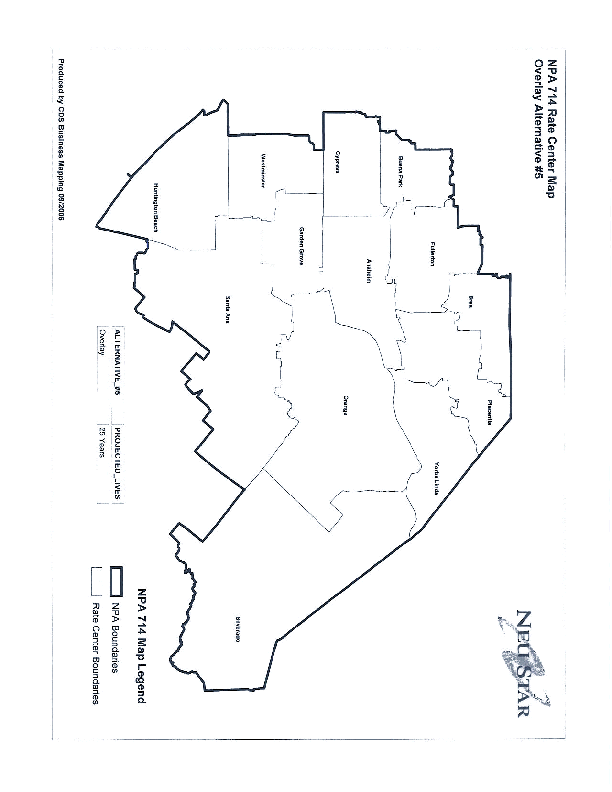
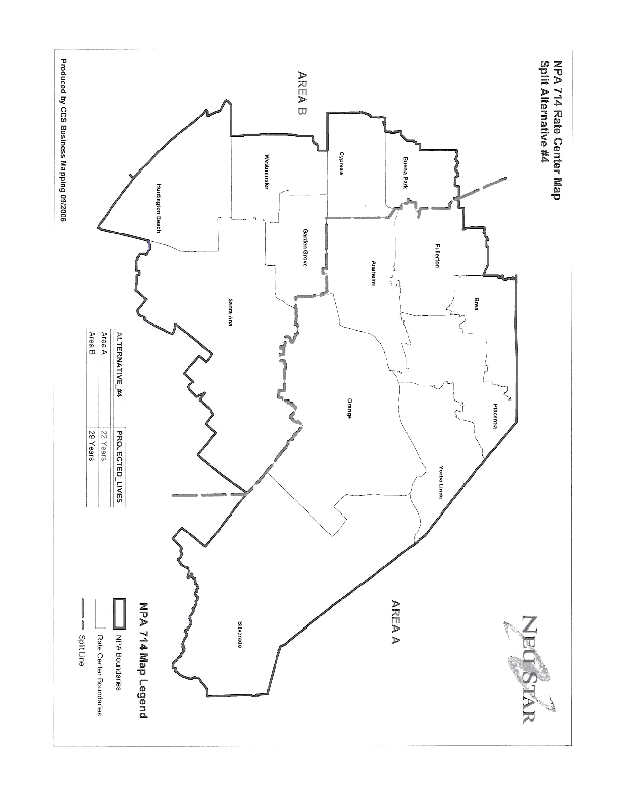
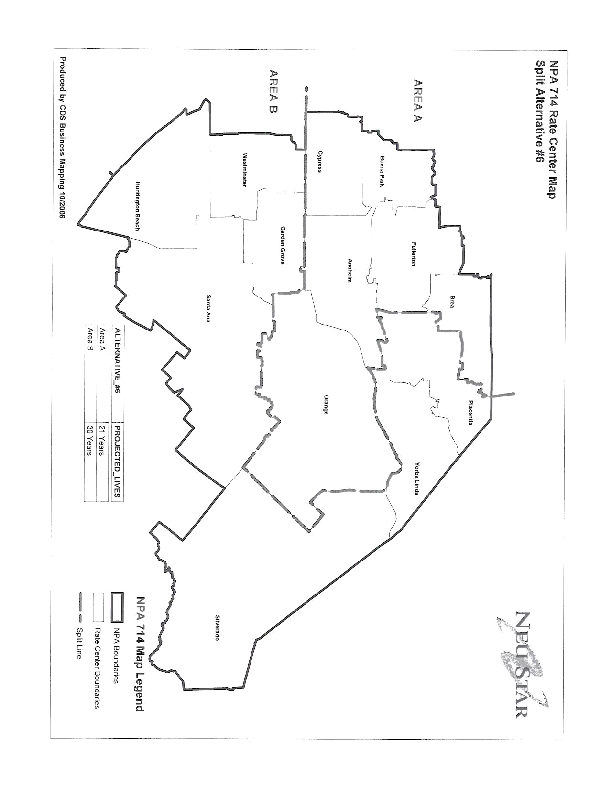 (END OF ATTACHMENT B)
ATTACHMENT C
714/657 Area Code Overlay Implementation Schedule | ||
MILESTONE |
DURATION |
START DATE |
Adoption of 714/657 Area Code Overlay Decision |
||
Public Education Program |
12 months |
Effective Date of the Order |
Network Preparation Period |
5 months |
Effective Date of the Order |
Permissive Dialing Period |
5 months |
Six Months from the Effective Date of the Order |
First Customer Notice |
Four Months from the Effective Date of the Order | |
Second Written Customer Notice |
11 Months from the Effective Date of the Order | |
Mandatory Dialing Period |
Six Months from the Start of Permissive Dialing Period | |
Open New 657 Area Code (i.e., date by which telephone numbers with the 657 area code may be assigned to consumers) |
At least 30 days from the start of the Mandatory Dialing Period | |
(END OF ATTACHMENT C)
ATTACHMENT D - Telecommunications Industry's Proposal for a PEP
Subcommittee Responsible |
Activity |
Description |
Audience |
Shared or Individual Carrier Effort |
N/A |
N/A |
714 Overlay Order approved |
N/A |
N/A |
Task Force |
Information |
Update company websites with 714 Overlay information |
All telcom users |
Individual |
Task Force |
Administration |
Formation of PEP Committee - each carrier to designate a committee representative |
N/A |
Commission Staff and Carrier Representatives |
Task Force |
Information |
As Directories are published add information on the cover to alert the consumer of 714/657 Area codes. |
All Telecom Users |
Individual |
Task Force |
Information |
Distribute information internally to be used as a tool by customer service representatives in order to answer customer inquiries |
Service Representatives |
Individual |
Special Interest Outreach |
Information |
Notify the California Relay Service to send messages to alert their customers to the 10-digit dialing in the 714/657 Area Codes |
Hearing Impaired |
Shared |
Greater Public Media |
News Release |
Telecommunication Industry to issue news release which describes the 714 Area Code relief plan (distribute within 714 Area including chambers of commerce and local government agencies) |
All telcom users |
Shared |
Special Interest Outreach/Customer Communications |
Information |
Telecommunications industry to send information package to Chambers of Commerce, city councils, John Wayne Airport, key government agencies, alarm-service providers and public safety organizations (e.g., 911PSAPs, police, sheriff and fire) throughout the 714 Area. |
Select organizations and associations |
Shared |
Customer Communications |
Information |
Customer Notification No. 1: Announce the new area code plan. Include information about 10-digit dialing and indicate affected areas. |
Resident (including pre-paid ) and Business Customers |
Individual |
Special Interest Outreach |
Information |
Contact key community leaders, legislators, state/local government contacts by letter, phone or visit. |
Key Leaders |
Shared |
Special Interest Outreach |
Information |
Provide targeted information to advocacy groups (seniors, consumer panels, activist organizations, etc.) by letter, phone or visit |
Advocacy groups and consumer groups |
Shared |
Special Interest Outreach |
Public Appearances |
Offer speeches or appearances to Chambers of Commerce, economic development organizations, service clubs, and other business organizations. |
Select organizations and associations |
Shared (Assuming use of Industry Spokesperson(s)) |
Greater Public Media |
Public Appearances |
Telecommunications industry to offer appearances on local radio and TV Talk shows |
All telecom users |
Shared (Assuming use of Industry Spokesperson(s)) |
Greater Public Media |
Information |
Telecommunications industry to issue news release to 714 Area media regarding approach of "transitional" dialing period. |
All telecom users (714 Area Code Area) |
Shared |
Permissive Dialing Begins |
|
Permissive Dialing begins |
|
|
Customer Communications |
Information |
Customer Notification No. 2: Announce the new area code plan. Include information about mandatory 10-digit dialing and indicate affected areas. |
Residence and Business Customers |
Individual |
Technical |
Information |
Complete the process for developing recorded announcements required for Mandatory Dialing |
Residence and Business Customers |
Individual |
Greater Public Media |
News Release |
Telecommunication Industry to issue news release to media regarding the start of mandatory dialing. |
All telcom users (within the 714/657 NPAs and adjacent NPA areas) |
Shared |
Special Interest Outreach |
Information |
Provide targeted information to advocacy groups (seniors, consumer panels, activist organizations, etc.) by letter, phone or visit |
Advocacy groups and consumer groups |
Shared |
Special Interest Outreach |
Information |
Provide targeted information to Schools by letter, poster and worksheet |
Schools |
Shared |
Special Interest Outreach |
Information |
Telecommunications industry to send information package to Chambers of Commerce, city councils, John Wayne Airport, key government agencies, alarm-service providers and public safety organizations (e.g., 911 PSAPs, police, sheriff and fire) throughout the 714 Area. |
Select organizations and associations |
Shared |
Special Interest Outreach |
Information |
Contact key community leaders, legislators, state/local government contacts by letter, phone or visit. |
Key Leaders |
Shared |
Paid Advertisement/Greater Public Media |
Public Appearances |
Telecommunications industry to offer appearances on local radio or TV Talk shows. |
All telecom users |
Shared (Assuming use of Industry Spokesperson(s)) |
Special Interest Outreach |
Public Appearances |
Offer speeches or appearances to Chambers of Commerce, economic development organizations, service clubs, and other business organizations. |
Select organizations and associations |
Shared (Assuming use of Industry Spokesperson(s)) |
Mandatory Dialing |
|
|
|
|
657 Numbering Resources Activated |
|
|
|
|
(END OF ATTACHMENT D)
ATTACHMENT E - Commission Adopted PEP
714/657 Area Code Overlay Public Education Program
Goals:
1. Promote not only consumer awareness, but also consumer acceptance of the area code overlay
2. Achieve a 70% customer awareness level about the overlay
Objectives:
1. Increase public awareness of the change in dialing patterns and area code identification resulting from implementation of the overlay
2. Increase customers' understanding of how they will be affected by the changes and the rationale behind the changes
3. Instill public assurance that cost or quality of telephone service will not be adversely affected by the changes
4. Promote positive acceptance by customers of the changes
Message Content:
1. Concept of an area code overlay
2. Concept of mandatory ten-digit dialing procedure when instituting overlays
3. Overlay will not affect the distinction between local and toll calls, nor the rates charged for the different types of calls.
4. Instructions to dial directory assistance to locate numbers applicable to different area codes within the same overlay region
5. The PEP's message content for all of its educational, outreach, and paid advertising materials shall primarily include the type of area code change being implemented, the new dialing procedure, the region covered by the 714/657 area code overlay, and information indicating that the cost or quality of telephone service will not be adversely affected by the change.
6. As applicable, feasible, or logical, the permissive dialing period, the mandatory dialing period, the tasks consumers should do in preparation of the overlay, and the reasons for adding a new area code shall also be included in the message content.
Audiences:
Primary - Consumers in 714 NPA geographic region and those consumers with telephone numbers with the 714 area code
Secondary - Consumers in NPA geographic regions adjacent to the 714 NPA geographic region
Tertiary - California consumers throughout the state
Activities:
1. Correct signage for dialing instructions on payphones and in directories
2. Update telephone directories to account for the 714 or 657 area code and the seven-digit number for each directory listing
3. Add information in directories' cover to alert the consumer of 714/657 area codes
4. Perform switch translation work for implementing mandatory dialing (12 weeks prior to cutover)
5. Institute the recorded instructional announcement alerting customers who dial seven digits to dial 1+10-digits and to continue this recorded announcement indefinitely by all service providers following the date that the 657 NPA is opened
6. Focus attention on the education of all classes of customers including children, the elderly, the disabled, as well as the many ethnic groups in the 714 NPA region
7. Specifically target key governmental agencies and community leaders, chambers of commerce, major airports, hospitals, alarm providers, pay telephone providers, fire and police departments, and the state coordinator for E-911
8. Inform customers in adjacent NPA regions to the 714 NPA region of the overlay and its effects via bill inserts
9. Include education for the whole state to some extent
10. Prioritize notification of security alarm companies, customers with PBXs, and other entities that will need to reprogram equipment as a result of the change to mandatory ten-digit dialing
11. Disseminate a combination of press releases, public service announcements, and billing
12. Disseminate targeted paid advertising in the relevant zoned editions of major newspapers as well as newspapers targeted to ethnic communities, billboard advertising, radio advertising, and television advertising
13. Mail letters, brochures, and collateral materials to local government officials in the overlay and adjacent NPA regions
14. Provide written customer notification to all affected customers about the specific geographic region that will be served by the new 657 area code, the schedule for any transitional dialing period, the overlay, and the new dialing procedure within 12 months prior to the date adopted by the Commission for opening the new 657 area code
15. Within three months before the date adopted by the Commission for opening the new 657 area code, each service provider shall again provide written customer notification to all its affected customers about the specific geographic region that will be served by the new 657 area code, the schedule for any transitional dialing period, the overlay, and the new dialing procedure
16. Conduct a well-balanced and statistically significant survey of those consumers living, residing, working, and/or attending school in the 714 NPA region and/or those consumers with telephone numbers with the 714 area code
17. Update company websites with 714/657 overlay information
18. Form PEP Task Force and its Sub-Committees - each service provider to designate at least one sub-committee representative
19. Distribute information about the 714/657 overlay to customer service representatives of each service provider in order to answer customer inquiries
20. Notify the California Relay Service to send messages to alert their customers of the overlay and its effects
21. Issue news release, which describes the 714 area code overlay to be distributed within the 714 NPA region including chambers of commerce and local government agencies
22. Send information package to Chambers of Commerce, city councils, John Wayne Airport, key government agencies, alarm-service providers and public safety organizations (e.g., 911 PSAPs, police, sheriff and fire)
23. Contact key community leaders, legislators, state/local government contacts by letter, phone or visit
24. Provide targeted information to advocacy groups (seniors, consumer panels, activist organizations, etc.) by letter, phone or visit
25. Offer speeches or appearances to Chambers of Commerce, economic development organizations, service clubs, and other business organizations
26. Offer appearances on local radio and TV Talk shows
27. Issue news release to 714 NPA region's media regarding approach of "transitional" dialing period
28. Complete the process for developing recorded announcements
29. Issue news release to media regarding the start of mandatory dialing
30. Provide information to schools by letter, poster, and worksheet at least two months before the start of summer
31. Institute permissive dialing
32. Institute mandatory dialing
33. Prepare network infrastructure for the area code overlay and new dialing procedure
(END OF ATTACHMENT E)
1 This will only be the second time that California has implemented an area code overlay. The involved the 310 area code, also in Southern California, which added the 424 area code.
2 The Federal Communications Commission (FCC) in paragraph 70 of FCC 00-429 "required mandatory 10-digit dialing for all calls in areas served by overlays to ensure that competition will not be deterred in overlay area codes as a result of dialing disparity."
3 Thousand-block number pooling is a resource allocation system that divides a prefix or central office code (NXX code), which is a group of 10,000 telephone numbers into ten sequential blocks or groups of 1,000 telephone numbers and allocates telephone numbers in blocks of 1,000. This system allows multiple service providers operating in the same rate area to share the ten thousand-blocks in a prefix at the thousand-block level.
4 An area code reaches "exhaust" when the supply of available central office codes or NXX codes (three-digit prefixes in common parlance) is depleted.
5 Attachment B includes all three maps for the three alternatives.
6 Any future applications for numbering plan relief should be served on cities and counties in the affected area and all code and thousand-block holders.
7 Public Utilities Code, Chapter 3.5, Section 7931(e)(2).
8 Id.
9 Id.
10 "Unbalanced lives" for an area code split means that one side will last considerably longer - perhaps years longer - than the other side, which would create an inequity for affected consumers, and would require adding yet another area code prematurely.
11 All citations are to the Public Utilities Code, unless otherwise indicated.
12 § 7943(a).
13 In ordering paragraph 5 of D.96-12-086, the Commission ordered that mandatory 1+10-digit dialing "be implemented as a condition of approving any overlay, but only in the NPA regions covered by the overlay" to alleviate any anticompetitive consequences of an area code overlay.
14 §§ 7931(f)(2) and (g).
15 § 7932(a)(3).
16 §§ 7931(f) and (f)(1).
17 The requirements were described in Ordering Paragraphs 8 and 9 and Conclusions of Laws 5 thru 11.
18 The Commission subsequently adopted a similar PEP in June 1999 for the 408/669 area code overlay in Appendix A of D.99-06-087.
19 Pacific Bell Telephone Company d/b/a AT&T California, Verizon Wireless, Sprint Nextell Corporation, New Cingular Wireless PCS, LLC, Omnipoint Communications, d/b/a T-Mobile and Verizon California, Inc.
