LYN/abw 3/26/2001
BEFORE THE PUBLIC UTILITIES COMMISSION OF THE STATE OF CALIFORNIA
|
Application of Southern California Edison Company (E 3338-E) for Authority to Institute a Rate Stabilization Plan with a Rate Increase and End of Rate Freeze Tariffs. |
Application 00-11-038 (Filed November 16, 2000) |
|
Emergency Application of Pacific Gas and Electric Company to Adopt a Rate Stabilization Plan. (U 39 E) |
Application 00-11-056 (Filed November 22, 2000) |
|
Petition of THE UTILITY REFORM NETWORK for Modification of Resolution E-3527. |
Application 00-10-028 (Filed October 17, 2000) |
ASSIGNED COMMISSIONER'S RULING
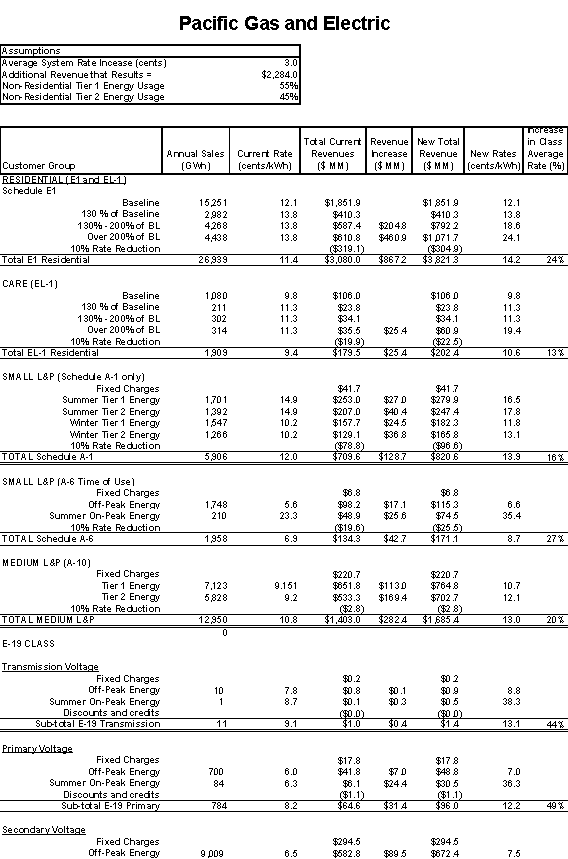
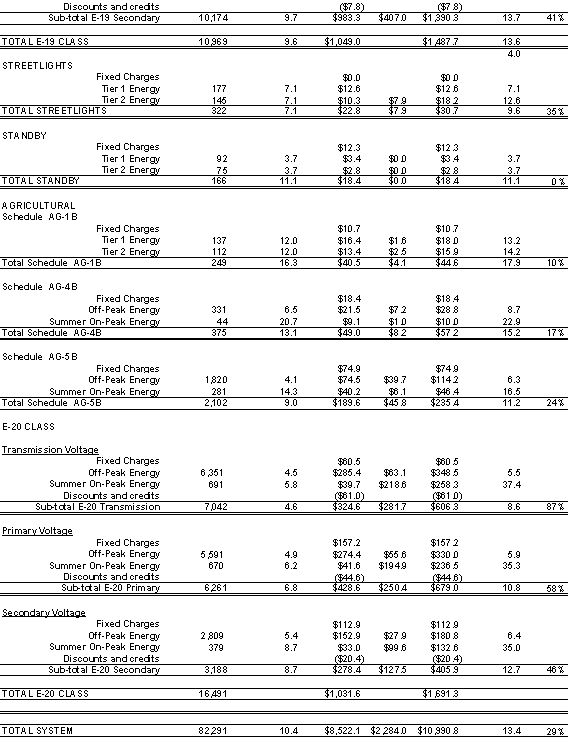
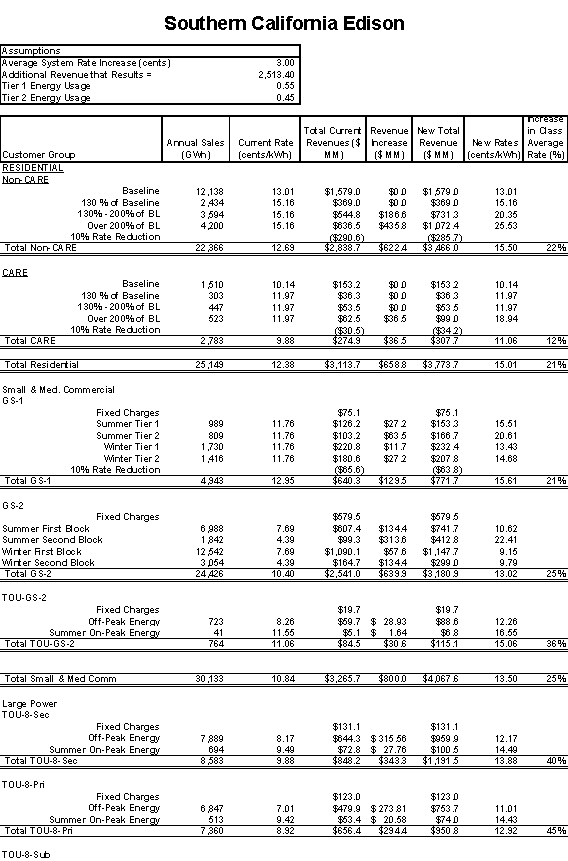
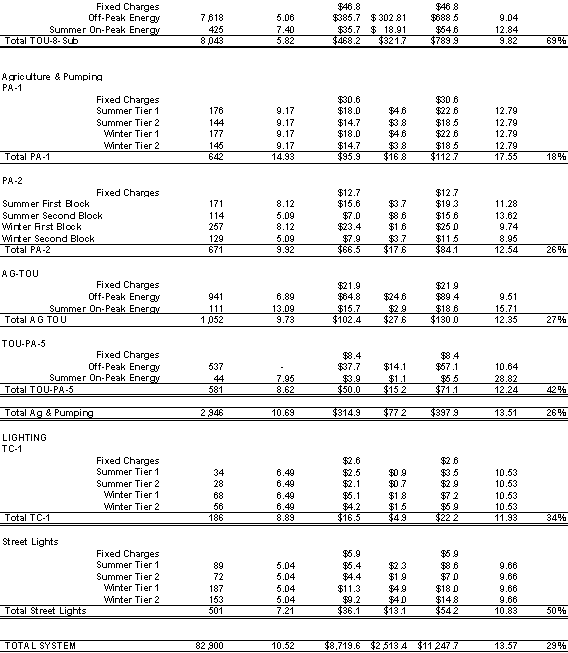
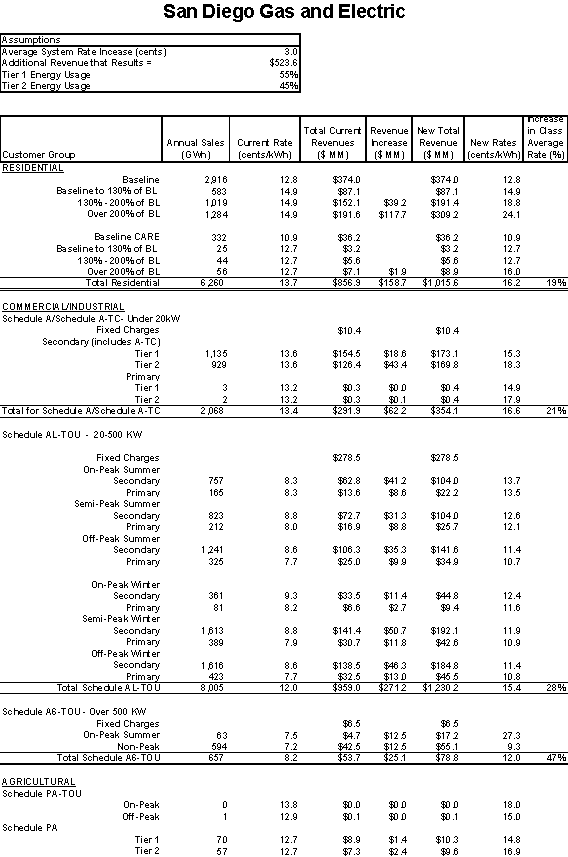
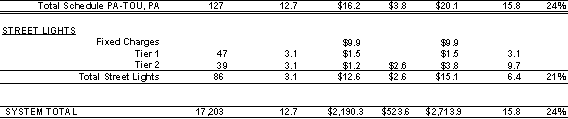
In my alternate proposed decision in the rate stabilization docket, I refer to a tiered rate design. To further expedite the decisions the Commission makes regarding rates, attached is a proposed tiered rate design for all customer classes hereby released for review. The principles followed in designing the attached rate proposal include:
· Residential customers who keep electric usage within 130% of baseline are exempted from rate increases, as mandated by ABX1 1;
· Base-rate differences among customer classes will be adjusted to reduce the disparity in prices paid for energy (on a per kilowatt hour basis) to ensure fairness in the prices paid for all energy purchased for California;
· For all customers, electric bills will be tiered to the amount of electricity used in order to promote conservation - the more you use, the more you pay for that extra electricity above a certain threshold of use;
· For commercial customers with time-of-use or other advanced meters, rates will be tiered to promote the greatest amount of conservation possible during summer peak hours;
· The class of CARE customers will be expanded to include 175% of the federal poverty level, but CARE customers who use above 200% of baseline could also participate in conservation incentives within a modified tiered rate structure.
Under this proposal, over 45% of residential customers will not see an increase in their electric bills, even without including projections for decreased usage from conservation incentives. Thus, it is likely that a much greater percentage of customers who do change behavior to use electricity more efficiently will not see a rate increase under this proposal. Similarly, this proposal does not take into account demand-side management programs now proposed in R.00-10-002. Once these programs are implemented, customers participating in those programs-primarily medium and large commercial customers-may also experience a decrease or leveling of their electric bills, based on reduced usage.
Several important caveats exist with respect to this rate design proposal:
· First and most importantly, this Commission has not received specific data from the California Department of Water Resources, (CDWR) to enable us to identify where gaps exist between power supplies already purchased and under contract and power demand requirements, by time of day and season. Upon receipt of this detailed information, we will be able to design rates to promote decreased use of electricity during the periods where gaps still exist between the amount of energy obtained by CDWR and the amount of energy needed. In the absence of specific information as to net short amounts of energy needed, the proposal assumes that summer on-peak energy usage is still the period when we need the greatest conservation.
· We recognize that reducing the disparity between the base rates for different customer classes may impose a larger percentage increase for certain customer classes' per kilowatt-hour rate. But fairness requires that we reduce the disparity between the prices paid for the basic energy component by each customer class.
· This proposal does not incorporate any of projections of reduced energy use based on rate increases (use reductions which also reduce charges on customers' bills). This proposal instead assumes the amount of energy used by each customer class historically. It is likely that adopting a rate design proposal that incorporates tiered rates to enhance conservation will result in a reduction in electricity use, further reducing prices to be paid.
The attached design is merely a proposal intended to jumpstart the public process of rate design. We invite customers and parties to submit their own proposals which demonstrate a fair shouldering of the burden of purchasing energy throughout 2001-2002.
Recognizing that the Commission needs to proceed expeditiously, this ruling sets an expedited schedule within which to evaluate rate design proposals. A pre-hearing conference will be set for April 2, 2001 at 10 a.m. with briefings and hearings, if required, to follow on an expedited schedule.
IT IS RULED that:
1. A proposed tiered rate design for all customer classes released for review.
2. A prehearing conference regarding designing new electric rates shall be held on April 2, 2001 at 10:00 a.m. in the Commission's Courtrooms.
Dated March 26, 2001, at San Francisco, California.
/s/ LORETTA M. LYNCH | ||
Loretta M. Lynch Assigned Commissioner |
CERTIFICATE OF SERVICE
I certify that I have by mail this day served a true copy of the original attached Assigned Commissioner's Ruling on all parties of record in this proceeding or their attorneys of record.
Dated March 26, 2001, at San Francisco, California.
/s/ ANN B. WHITE |
Ann B. White |
NOTICE
Parties should notify the Process Office, Public Utilities Commission, 505 Van Ness Avenue, Room 2000, San Francisco, CA 94102, of any change of address to insure that they continue to receive documents. You must indicate the proceeding number on the service list on which your name appears.
* * * * * * * * * * * * * * * * * * * * * * * * * * * * * * * * * * * * * * *
The Commission's policy is to schedule hearings (meetings, workshops, etc.) in locations that are accessible to people with disabilities. To verify that a particular location is accessible, call: Calendar Clerk (415) 703-1203.
If specialized accommodations for the disabled are needed, e.g., sign language interpreters, those making the arrangements must call the Public Advisor at (415) 703-2074 or TTY# 1-866-836-7825 or (415) 703-5282 at least three working days in advance of the event.